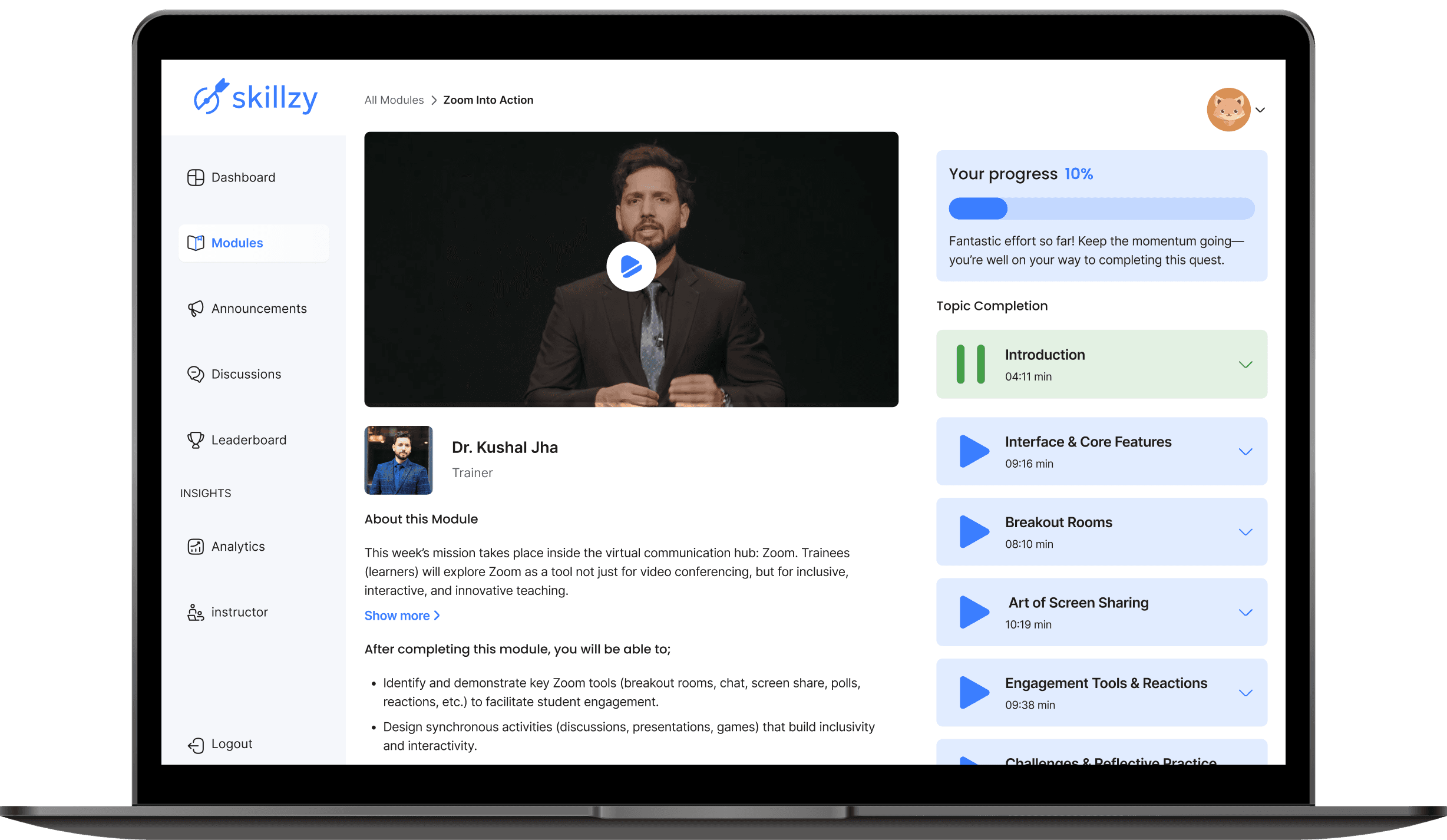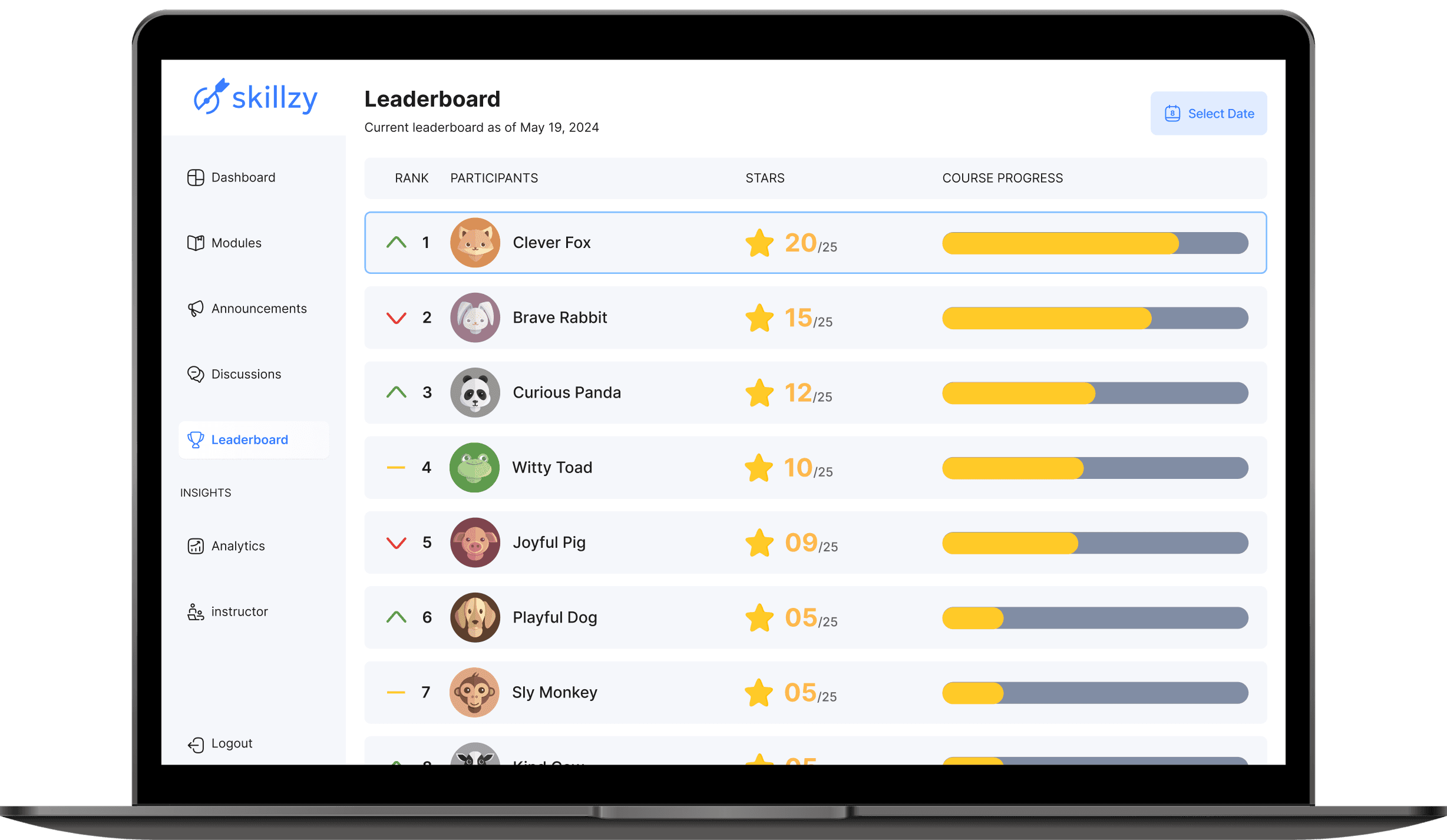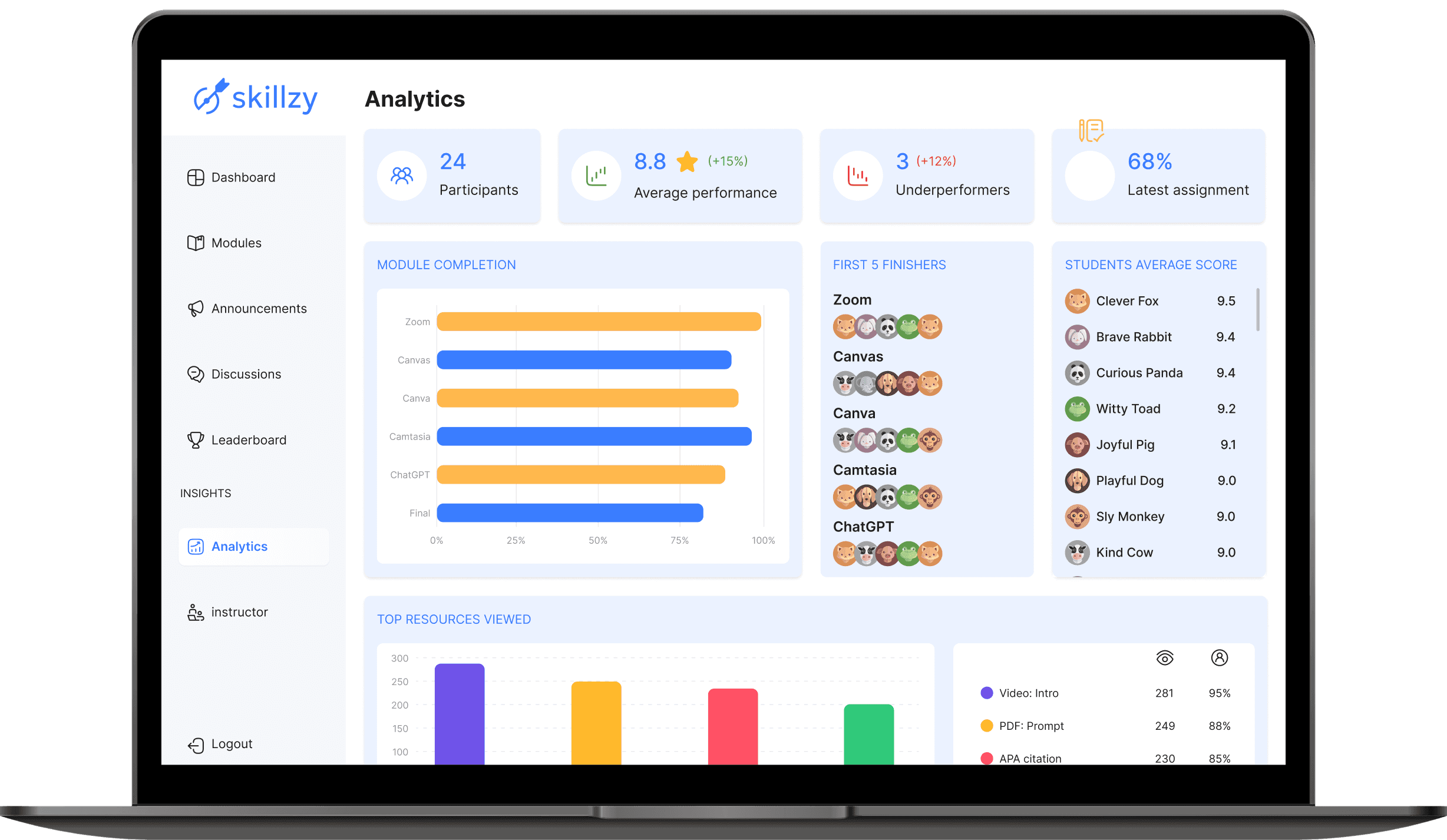
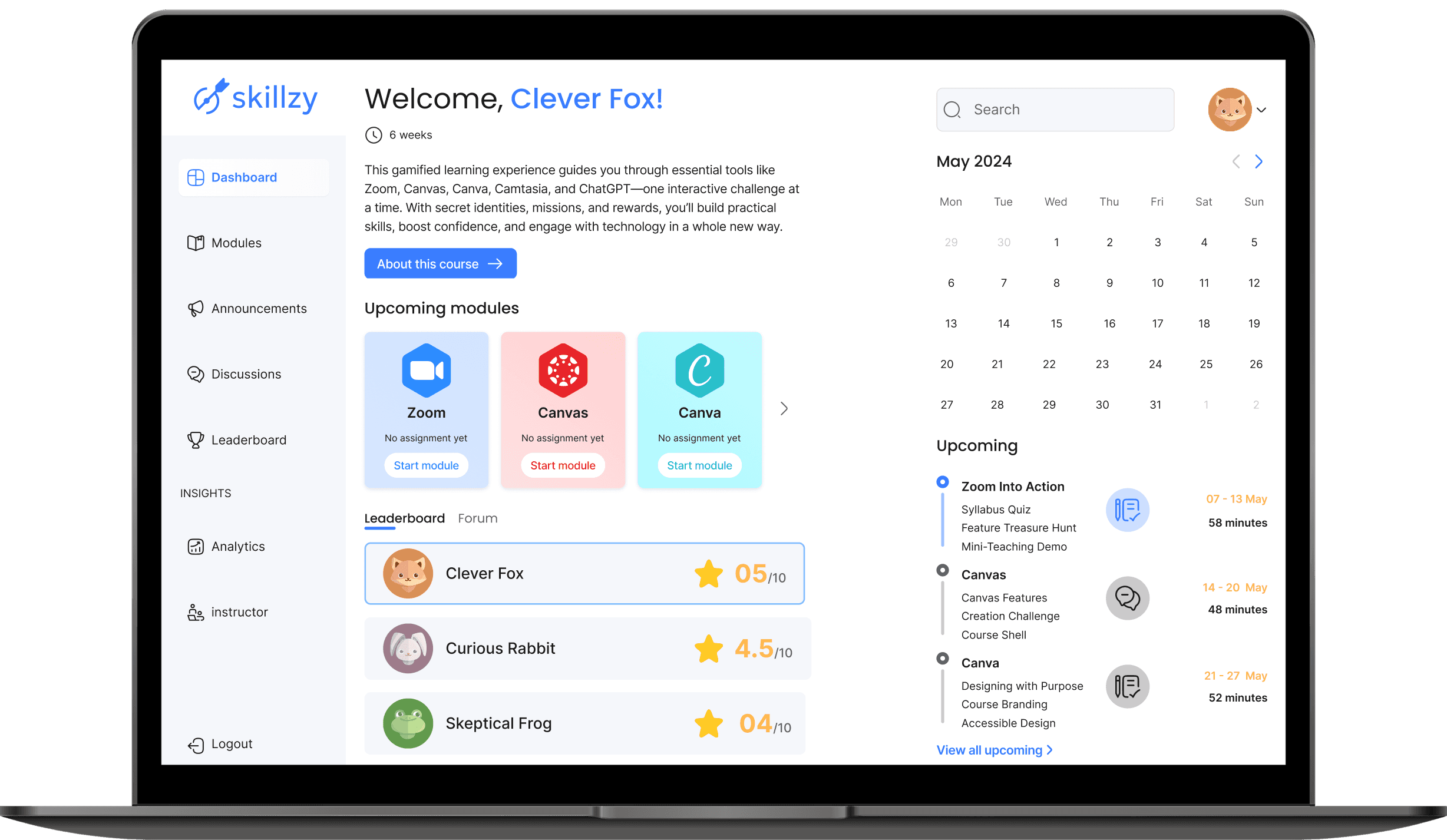
I build AI-enabled learning systems end-to-end, from needs analysis through facilitation and measurement. At the University of South Carolina, I've designed and shipped programs that have reached more than 25,000 learners, embedded AI fluency into the first-year student experience, and now extend across faculty, staff, and leadership. The work below reflects how I move from strategy to shipped programs, measure what matters, and treat AI as a chance to reimagine talent development rather than retrofit it onto what already exists.
University AI Roadmap
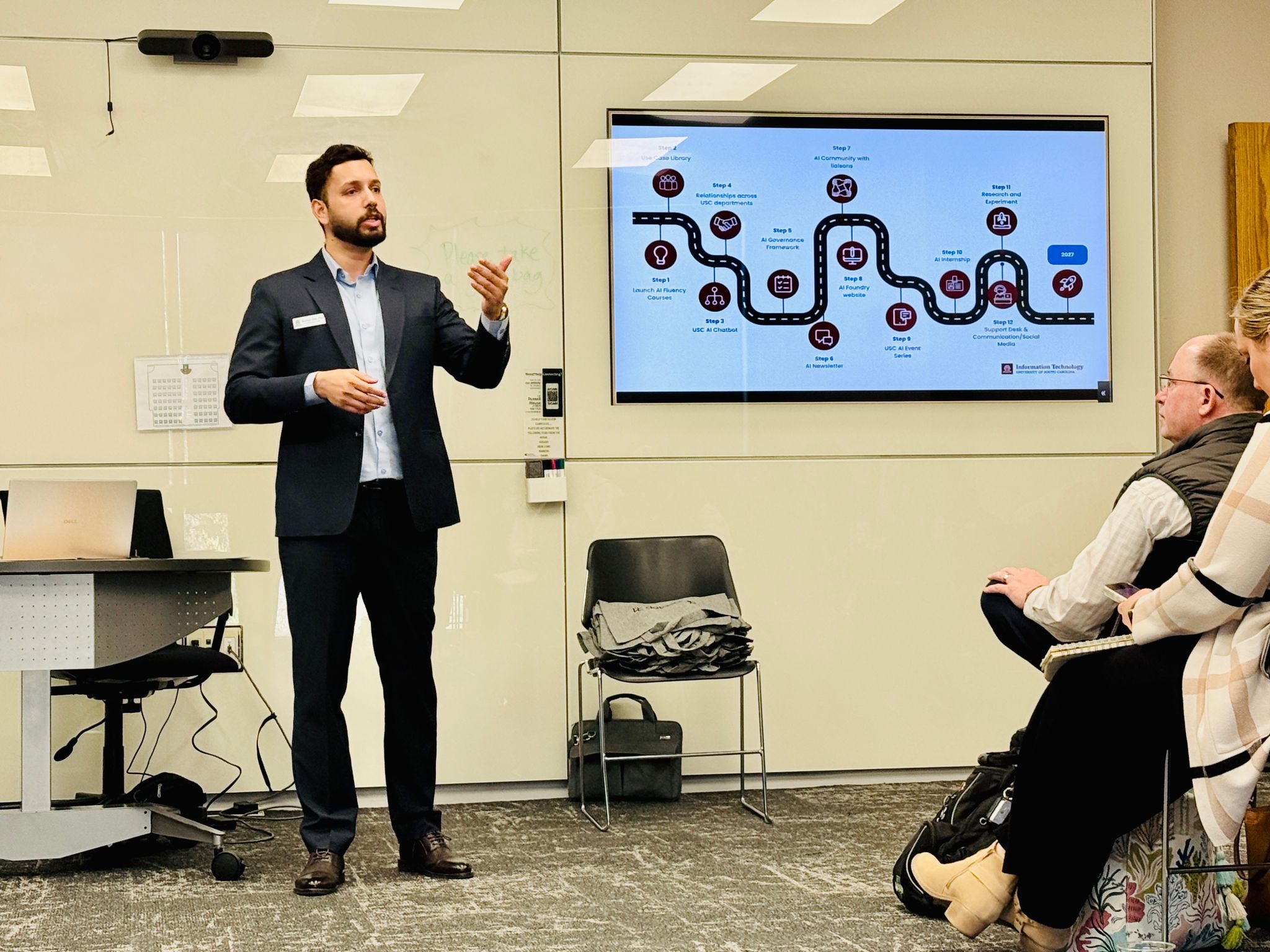
I authored USC's University AI Roadmap and now lead its implementation across campus, translating institutional strategy into shipped programs, measurable adoption, and operational infrastructure. The roadmap defines how a 50,000-person organization moves from AI interest to AI fluency, covering literacy, governance, support, workforce readiness, and change management.
My role spans the full arc: setting the point of view, designing the implementation structure, prioritizing initiatives, partnering across academic and administrative leadership, and shipping the programs that move the strategy forward. This work shows my ability to operate in ambiguity, connect learning design to organizational strategy, and build the systems that make large-scale change actually happen.
Impact focus: Enterprise AI strategy, change management, organizational enablement, implementation planning, executive partnership, learning infrastructure at scale.
Garnet AI Fluency 101
I designed and shipped Garnet AI Fluency 101, an AI and LLM-aware learning experience built from first principles to give USC's students, faculty, and staff practical, responsible, workforce-relevant AI skills. The program reached 25,000+ learners, earned 96% positive feedback, and produced a 50% lift in measured AI fluency among participants.
I built the curriculum from scratch, designed across self-paced and live modalities, and instrumented the program for measurement so I could iterate quickly on what was actually working. Garnet AI Fluency 101 is now a foundational layer of how the university talks about AI and a working example of AI-enabled learning that people opt into and finish.
Impact focus: 25,000+ learners shipped, 96% positive feedback, 50% measured fluency gain, AI-enabled instructional design, multi-modality curriculum, measurable learning outcomes.
U101 AI Readiness Training
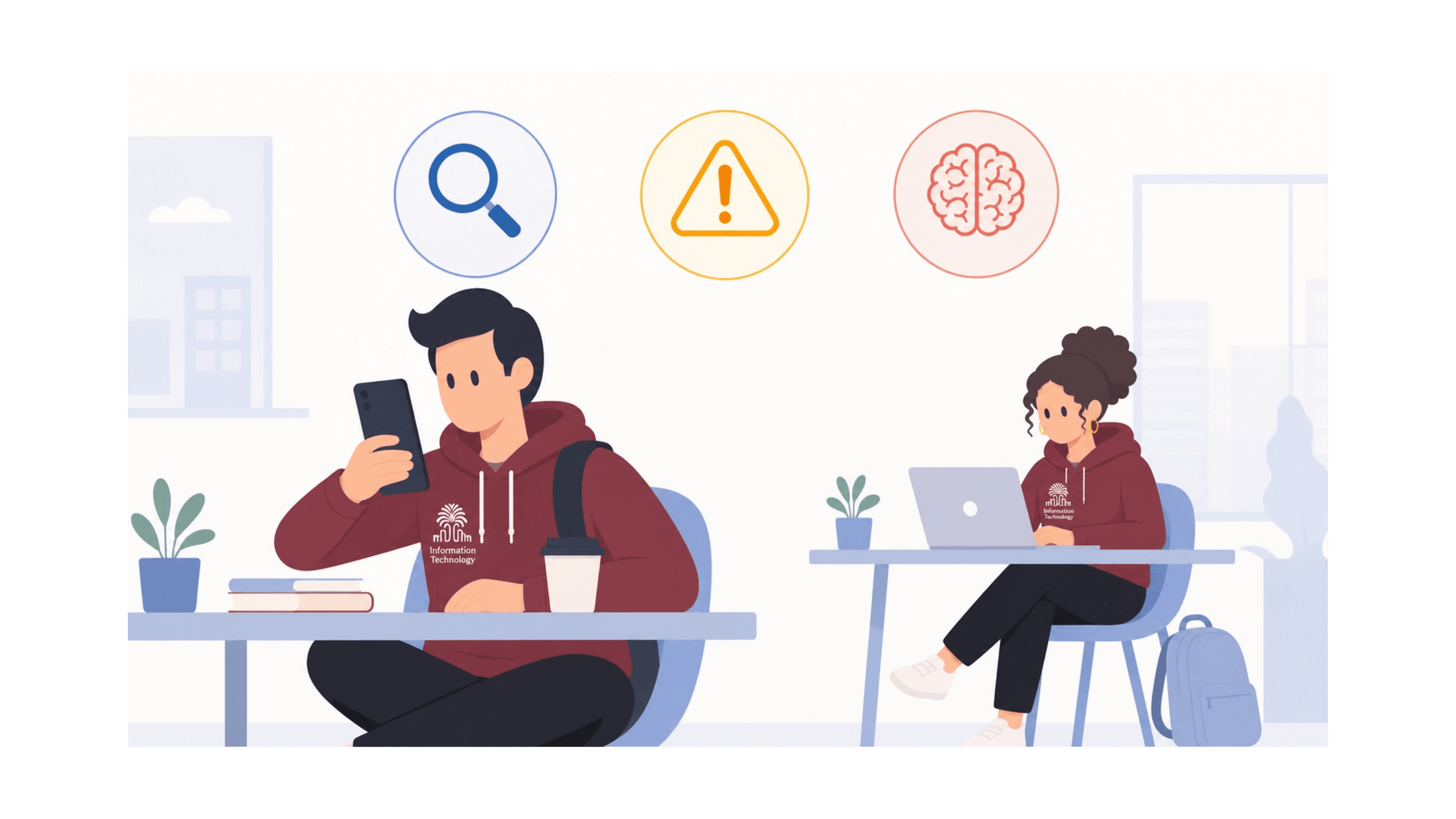
I designed the U101 AI Readiness Training, embedded into USC's required first-year experience for every incoming student. Rather than treating AI fluency as an optional workshop, I built it into the onboarding lifecycle so every new learner starts university with a shared foundation in responsible AI use, productivity workflows, and the role of AI in their future work.
The design challenge was reaching a large, mandatory, mixed-readiness audience without losing the depth that makes AI training useful. I shipped a learning experience that meets that bar and scales across thousands of students per cohort, with a clear measurement layer to inform iteration.
Impact focus: Mandatory enrollment audience, lifecycle-integrated learning, scalable instructional design, responsible AI use, workforce preparation.
AI Support Center
I am building USC's AI Support Center, launching in June, end-to-end: service model, support workflows, escalation paths, staffing approach, training curriculum for support staff, and the user-facing experience. This is the operational backbone for AI adoption at the university, the layer that turns training into sustained behavior change.
Most AI rollouts ship training and stop there. I built this because adoption fails without support infrastructure. The Support Center is designed to give students, faculty, and staff one coordinated place for help with approved tools, responsible-use questions, and workflow integration, and is instrumented from day one so we can measure what people actually need help with and feed that back into program design.
Impact focus: Service design, support operations, launch ownership, end-to-end build, adoption infrastructure, measurement-driven iteration.
Cross-Campus Staff AI Training
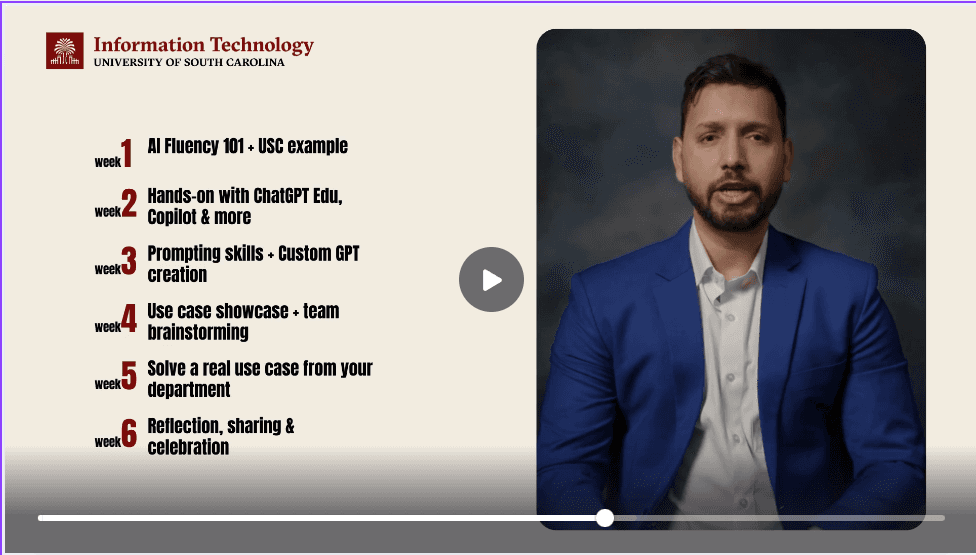
I am designing AI training for staff across USC's administrative and operational departments, focused on practical workflow transformation rather than tool tours. The audience is the part of the workforce most often left out of AI rollouts and most exposed to how work is changing: HR, finance, advising, communications, operations, IT.
The program is built around role-specific workflows, governance-aware guidance, and confidence-building through hands-on practice. This is reskilling work, preparing an organization and its managers for a moment of significant change, and it's designed to scale across departments without diluting relevance to any one of them.
Impact focus: Workforce reskilling, role-specific learning design, manager and team enablement, organizational change, governance-aligned adoption.
AI Adoption & Analysis
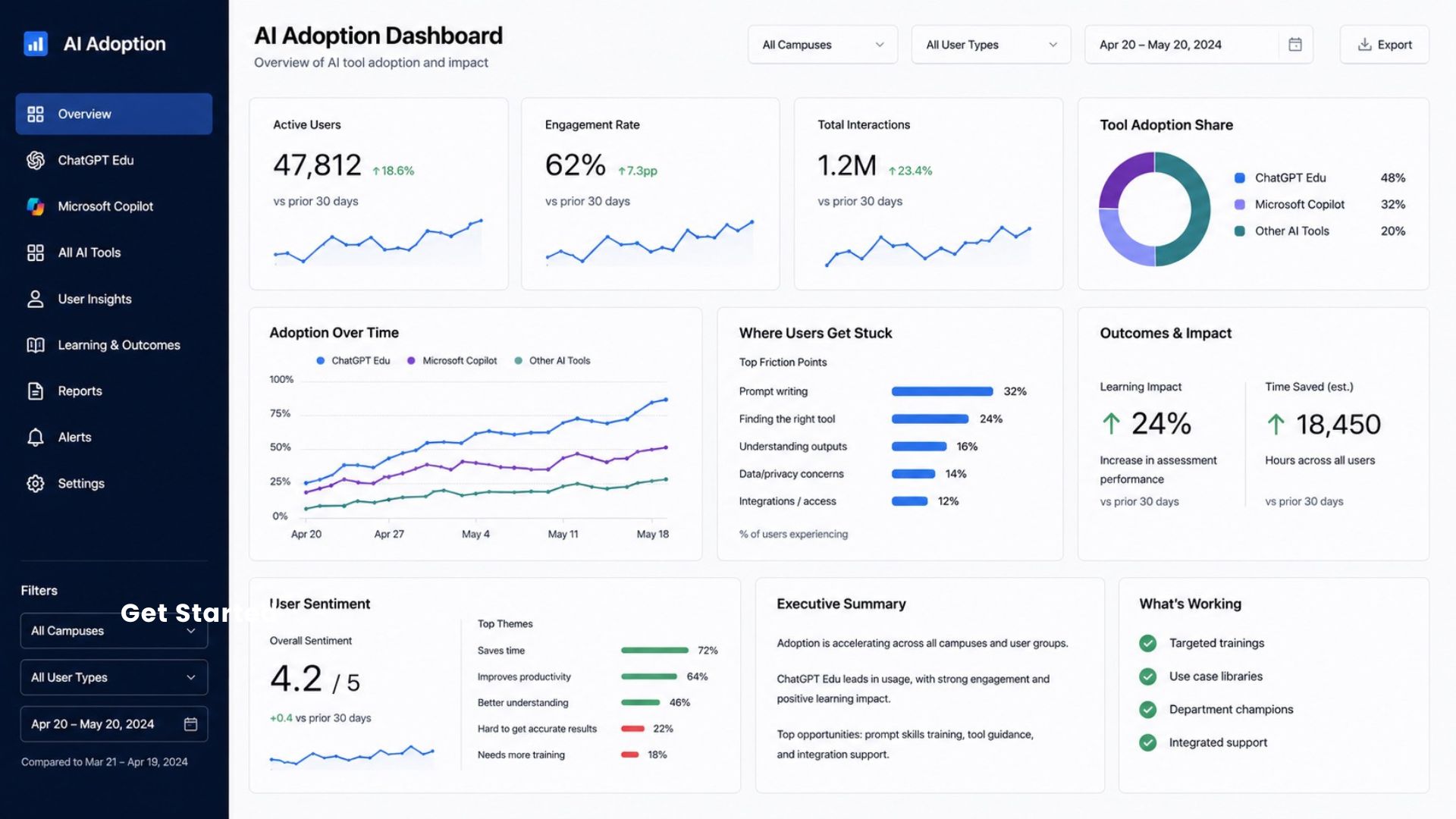
I lead adoption analysis for ChatGPT Edu, Microsoft Copilot. and the broader AI tooling footprint at USC, turning usage data into decisions. I track adoption patterns, surface where users are stuck, identify what's working, and translate the signal into changes to training, support, and institutional strategy.
This is the measurement layer that connects everything else. Programs without measurement drift; this work makes sure every initiative I ship has a feedback loop attached and that leadership has a clear view of whether the AI investment is producing the outcomes we said it would.
Impact focus: Adoption analytics, learning measurement, executive reporting, data-informed program design, continuous improvement.
AI Enablement Initiatives
I run ongoing AI enablement across USC: workshops, executive sessions, consultations, learning resources, demos, and workflow guidance for students, faculty, staff, and leadership. The work spans modalities (live virtual, in-person, self-service) and audiences (individual contributors, first-time users, experienced practitioners, deans, executives).
This is where I do most of my facilitation, including holding the room with senior university leadership on AI strategy and adoption. The throughline is meeting people where they are, reducing friction, and turning curiosity into confident, responsible use.
Impact focus: Multi-modality facilitation, executive and leader audiences, hands-on enablement, adoption acceleration, audience-specific design.
AI Governance & Adoption Support
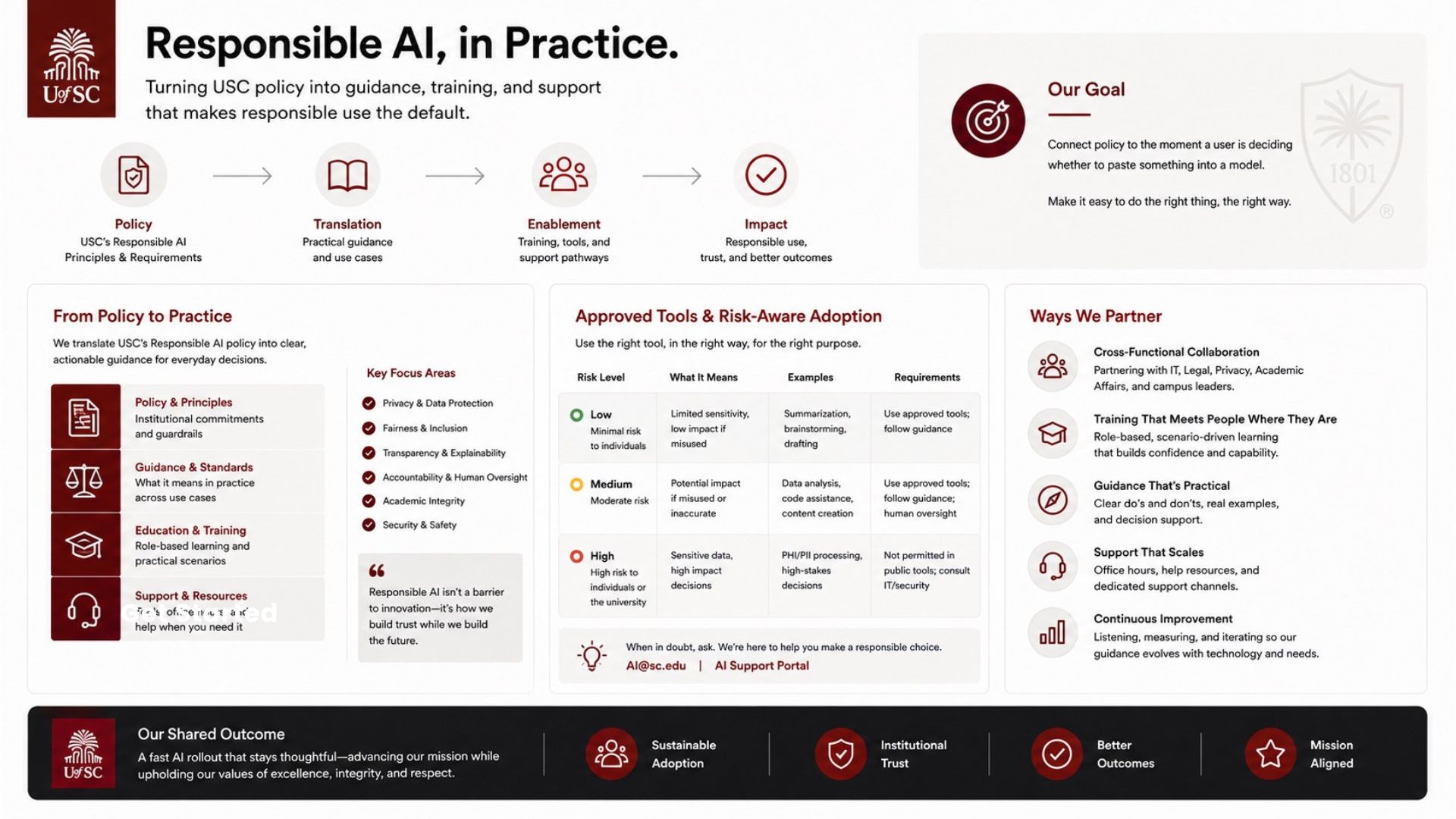
I translate USC's responsible AI policy into the practical guidance, training, and support pathways that make it usable. Governance documents don't change behavior on their own; the work is connecting policy to the moment a user is deciding whether to paste something into a model.
I partner with governance stakeholders to build the education and implementation layer that makes responsible use the default: approved-tool guidance, risk-aware adoption pathways, training alignment, and support practices that scale. This work is how a fast AI rollout stays a thoughtful one.
Impact focus: Policy-to-practice translation, responsible AI by design, cross-functional partnership, sustainable adoption, institutional trust.