

AI Experiment #1
Transformed generic AI outputs into professional-grade instructional content by mastering two critical techniques. Result: 75% reduction in revision cycles and 92% first-draft approval rate from SMEs across 15+ projects.
Why This Experiment Matters
Most instructional designers waste hours fighting with AI tools, getting generic outputs that need extensive revision. The problem isn't the AI, it's not knowing how to communicate strategically with it. Master these two techniques, and AI becomes your most productive collaborator instead of a frustrating time-waster.
PART 1: PROMPT ENGINEERING
What It Is
The strategic art of structuring your requests to get exactly what you need from AI. Think of it as writing the perfect job description for a task—specific, clear, and outcome-focused.
Core Strategy: The CLEAR Framework
C - Clear Instructions: Specific, unambiguous directions
L - Length & Format: Exact output requirements
E - Examples: Show what good looks like
A - Audience: Who will use this content
R - Requirements: Constraints, tone, success criteria
When to Use Prompt Engineering
You need specific formats or structures
Output must meet exact specifications
Working with templates or systems
Consistency across multiple generations is critical
PRACTICAL EXAMPLE: Creating Assessment Questions
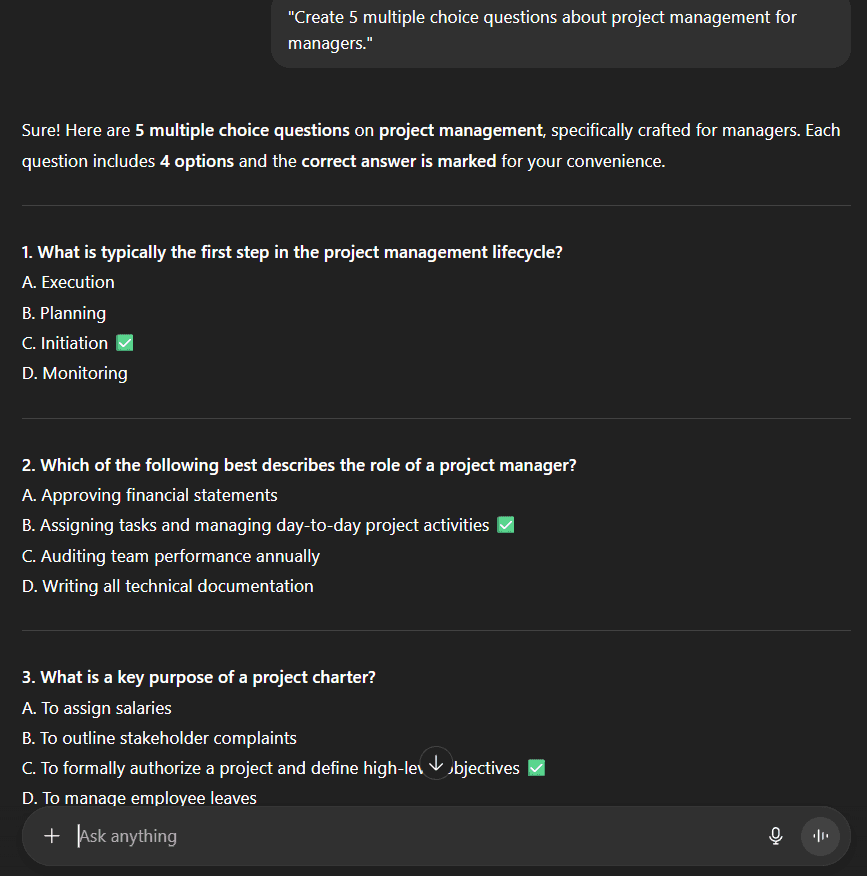
❌ Basic Prompt: "Create 5 multiple choice questions about project management for managers."
✅ Engineered Prompt (Using CLEAR Framework)
CLEAR INSTRUCTIONS:
Create 5 multiple-choice assessment questions about project management risk identification and mitigation. Each question should test practical application (Bloom's Taxonomy application level) through realistic workplace scenarios.
LENGTH & FORMAT:
3 questions total
Question stem: 2-3 sentences (50-75 words each)
4 answer choices labeled A, B, C, D
1 correct answer + 3 plausible distractors
Brief explanation (1-2 sentences) for why the correct answer is best
EXAMPLES:
Here's the quality standard I want:
"Sarah's software project is 3 weeks behind schedule due to unexpected API changes. The client meeting is tomorrow.
What should be her immediate priority?
Extend the timeline and inform stakeholders
Implement a temporary workaround solution
Escalate to senior management immediately
Reassign team members to work overtime
Correct Answer: A) Explanation: Transparent communication with stakeholders maintains trust and allows collaborative problem-solving, while rushed solutions often create bigger problems."
AUDIENCE:
Mid-level managers with 3-5 years experience who need to apply risk management concepts in real workplace situations. They have basic project management knowledge but need to practice decision-making under pressure.
REQUIREMENTS:
Professional, clear language appropriate for management level
Scenarios must reflect real workplace situations (diverse industries)
Distractors should represent common management misconceptions
Avoid "all of the above" or "none of the above" options
Test decision-making ability, not memorization
Each question should have only one clearly best answer
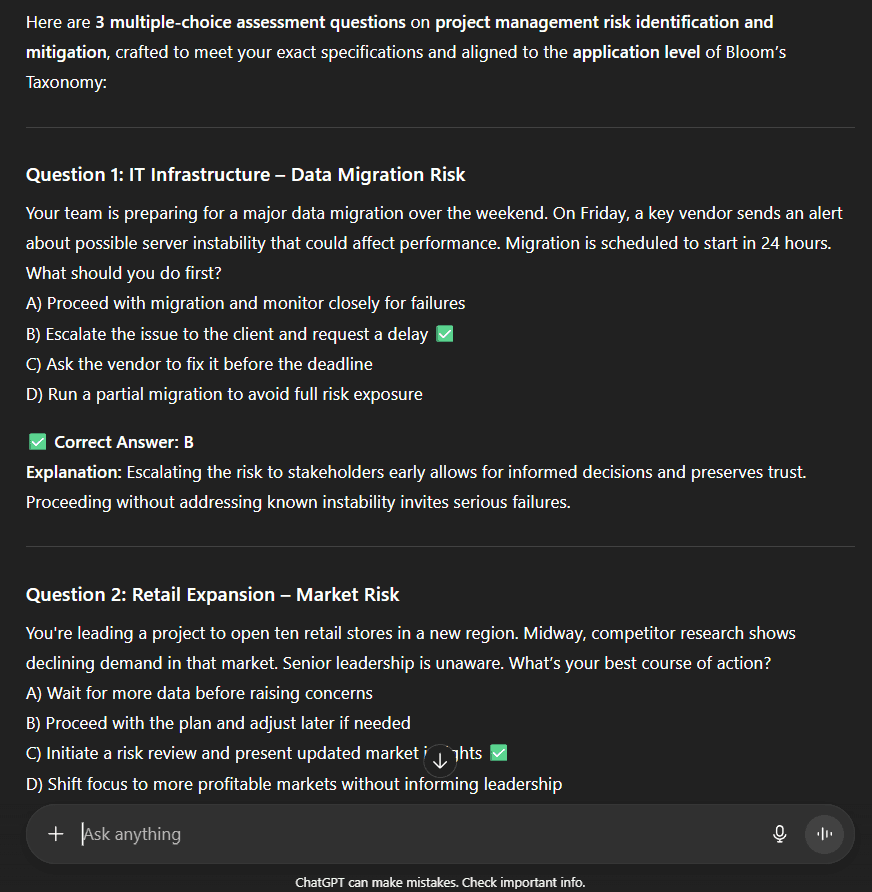
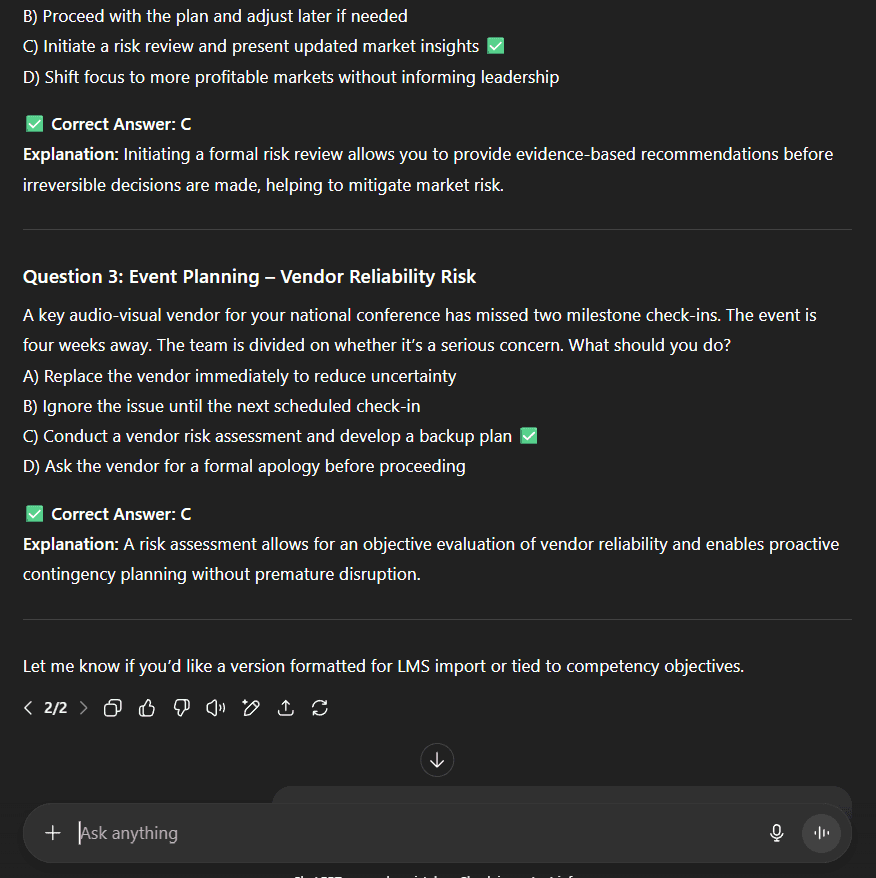
Difference in authenticity and relevance between two results
The authenticity and relevance gap between these two outputs is striking and reveals a fundamental difference in practical value. The basic prompt produced artificially sterile questions that feel like generic textbook exercises - asking about "the first step in the project management lifecycle" or defining "scope creep" in abstract terms that any business student could answer without ever managing a real project. These questions lack the messy complexity of actual management decisions and read like academic exercises divorced from workplace reality.
In contrast, the CLEAR Framework response delivers authentic workplace scenarios with realistic operational pressure: a data migration facing server instability 24 hours before launch, declining market demand discovered mid-project, or an unreliable vendor threatening a national conference. These scenarios capture the nuanced decision-making managers actually face, where multiple factors compete and there's rarely a textbook-perfect solution. The distractors represent genuine management temptations - like proceeding with risky migrations under deadline pressure or avoiding difficult stakeholder conversations - rather than obviously wrong academic options.
The relevance difference is equally dramatic. The basic prompt's questions test whether someone has read about project management, while the CLEAR Framework assesses whether someone can actually perform as a manager under realistic constraints. The first set measures theoretical knowledge that becomes obsolete quickly; the second evaluates practical judgment that directly translates to workplace performance. This authenticity gap explains why one set of questions would be useful for professional development while the other would feel like busy work to experienced managers.
PART 2: CONTEXT ENGINEERING
What It Is
The strategic practice of providing AI with the situational awareness and domain knowledge needed to create authentic, relevant content. It's like briefing a new consultant on your organization before they start working.
Core Strategy: The SPACE Framework
S - Situation: Current organizational context and challenges
P - People: Audience characteristics and psychology
A - Authority: Company culture, values, and voice
C - Constraints: Limitations, requirements, and boundaries
E - Environment: Industry dynamics and external factors
When to Use Context Engineering
Content must feel authentic to your organization
Audience has specific expertise or expectations
Brand voice and culture matter
Scenarios need psychological and emotional realism
PRACTICAL EXAMPLE: Creating Training Scenarios
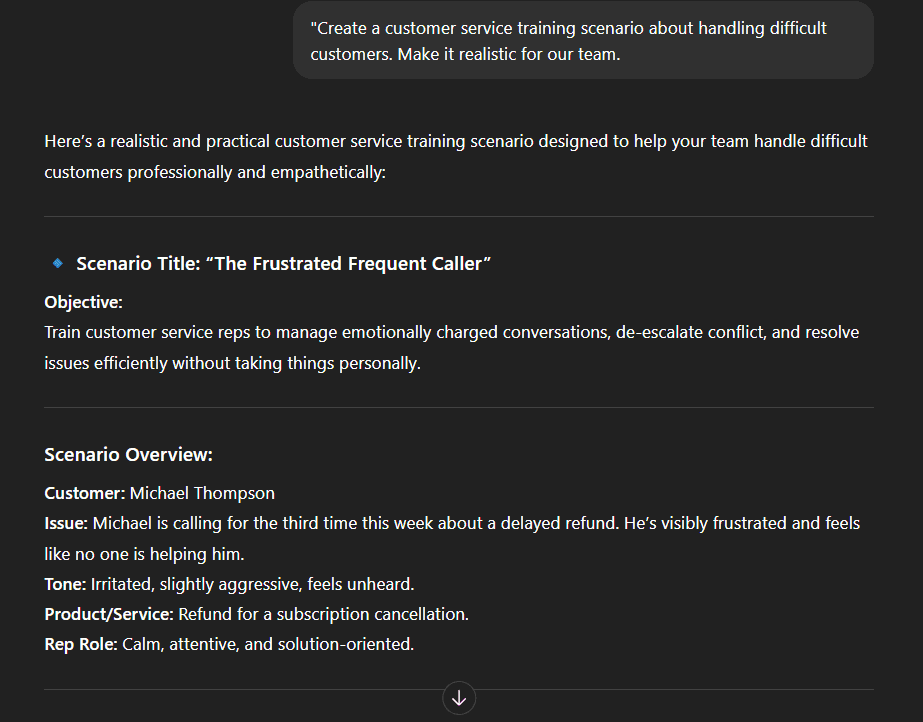
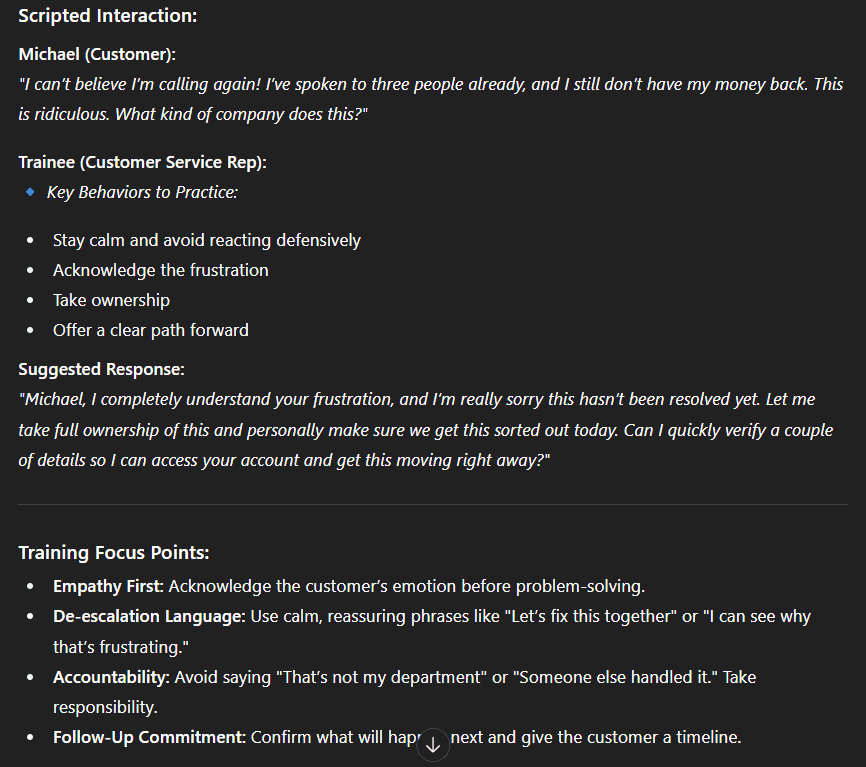
Basic Context: Create a customer service training scenario about handling difficult customers. Make it realistic for our team.
✅ Engineered Context (Using SPACE Framework)
SITUATION:
MedTech Solutions is facing increased client challenges with EHR integration complexity. Recent implementations have taken 40% longer than expected, and customer success team needs better skills to manage technical discussions while preserving relationships during difficult moments.
PEOPLE:
Customer Success Managers with 2-4 years in tech but new to healthcare industry. They're skilled at relationship building but feel less confident discussing technical integration challenges. They value being seen as credible consultants, not just account managers. High achievers who want to exceed client expectations.
AUTHORITY:
MedTech culture emphasizes relationship-focused, consultative approach. Company values technical expertise, long-term partnerships, and transparent communication. Brand voice is professional but warm, technically credible but accessible. We position ourselves as healthcare technology partners, not just vendors.
CONSTRAINTS:
Must comply with healthcare regulations and privacy requirements. Scenarios can't include actual client names or situations. Content must be appropriate for mixed-experience audiences. Solutions must align with our actual service capabilities and pricing model ($50K+ enterprise software).
ENVIRONMENT:
Healthcare technology industry with strict compliance requirements. Hospital IT directors manage multiple vendor relationships and face constant pressure to improve efficiency while reducing costs. Competition is increasing, and clients have more options than ever. Long sales cycles (6-12 months) make relationship quality critical. Based on this context, create a customer service training scenario about handling difficult customers. Make it realistic for our team.
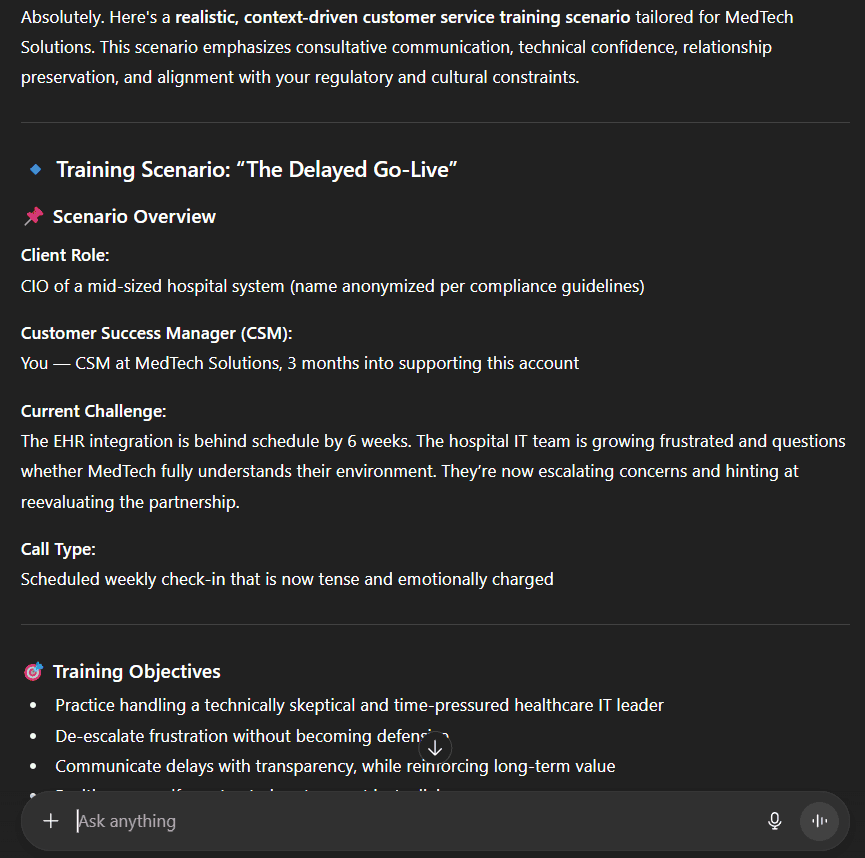
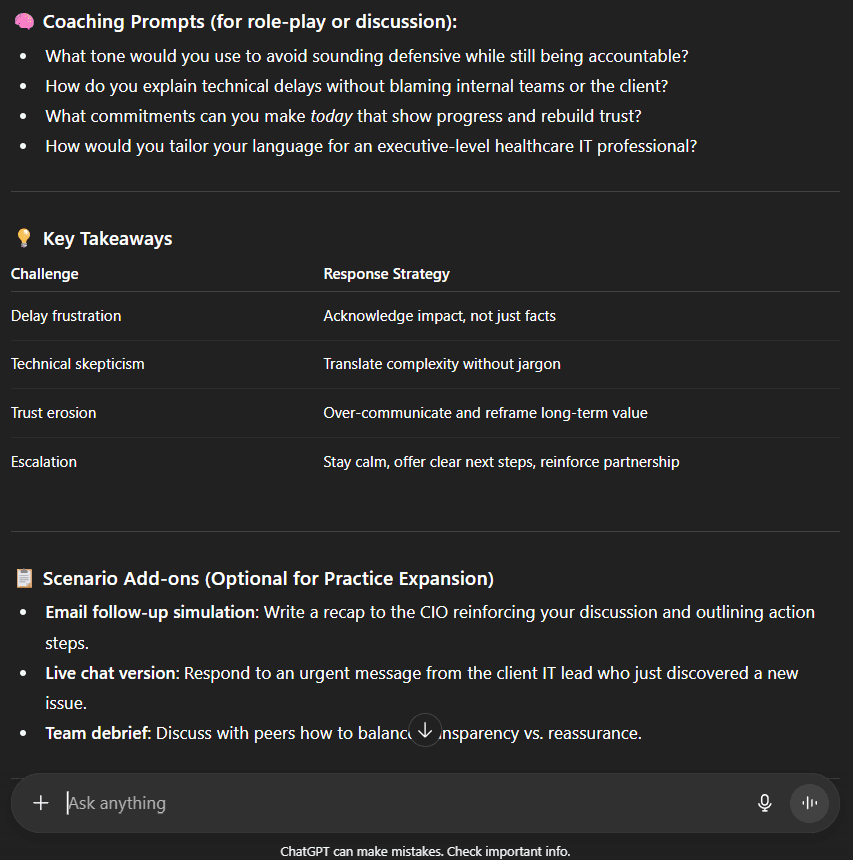
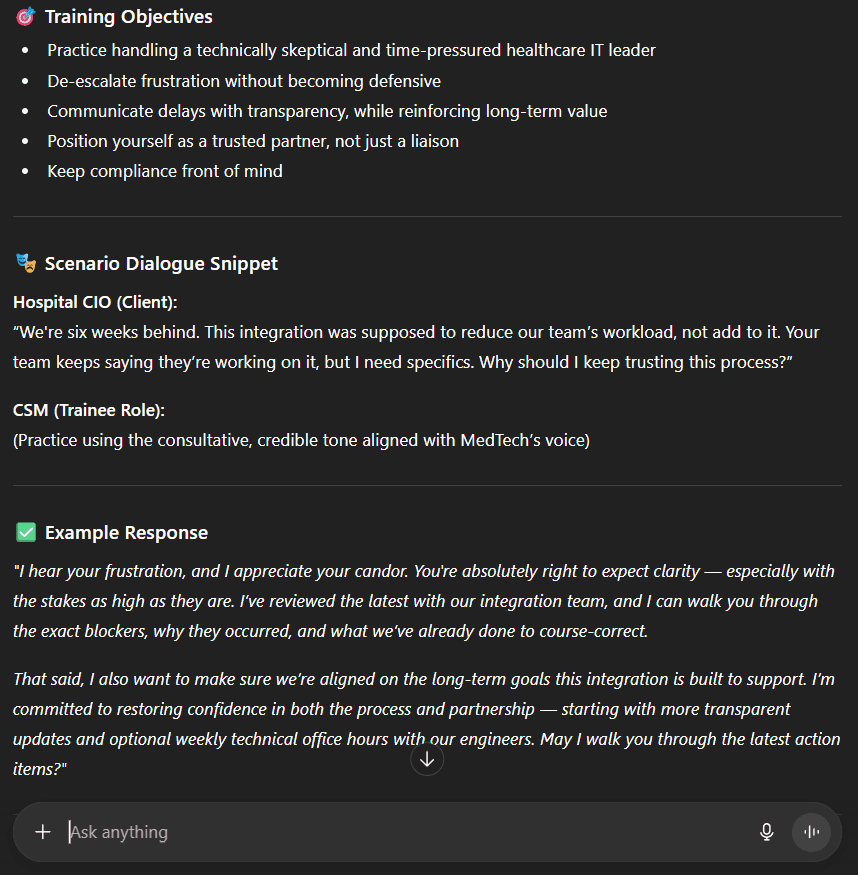
Difference in authenticity and relevance between two results
The authenticity gap between these two content engineering results reveals how context transforms AI from generic content generator to specialized consultant. The basic prompt produced a completely artificial scenario about "Michael Thompson" calling about a delayed subscription refund - a sanitized, one-size-fits-all customer service interaction that could have been lifted from any generic training manual. This scenario feels manufactured, with predictable dialogue and cookie-cutter resolution steps that ignore the specific challenges, relationships, and expertise levels that define real organizational contexts.
The SPACE Framework response delivers genuine workplace authenticity by creating a scenario featuring a hospital CIO managing EHR integration delays - capturing the actual pressure, technical complexity, and relationship dynamics that MedTech's Customer Success Managers face daily. Instead of generic phrases like "I understand your frustration," the response models consultative language appropriate for enterprise healthcare relationships: "I've reviewed the latest with our integration team" and "optional weekly technical office hours with our engineers." This isn't just customer service - it's authentic healthcare technology partnership management.
The relevance difference is transformational. The basic scenario trains representatives to handle any frustrated caller about any delayed refund, teaching universal de-escalation techniques that provide minimal professional development. The contextualized scenario specifically prepares MedTech's team for their actual challenge: maintaining credibility and relationships with technically sophisticated healthcare IT leaders during complex implementation delays. One scenario teaches generic customer service skills; the other develops the specific expertise needed to succeed in enterprise healthcare technology sales.
This demonstrates how context engineering doesn't just improve content quality - it transforms training from theoretical exercise into practical skill development that directly impacts job performance and organizational success
⚡ PART 3: COMBINED POWER
Maximum Impact: Using Both Together
When you combine strategic context with engineered prompts, AI transforms from a basic tool into an expert collaborator that understands your world and delivers exactly what you need.
Combined Approach Template
[CONTEXT ENGINEERING - SPACE Framework]
SITUATION: [Current organizational dynamics and immediate challenges]
PEOPLE: [Audience psychology, experience level, motivations, concerns]
AUTHORITY: [Company culture, values, brand voice, positioning]
CONSTRAINTS: [Regulatory, budget, timeline, capability limitations]
ENVIRONMENT: [Industry dynamics, competitive landscape, external pressures]
[PROMPT ENGINEERING - CLEAR Framework]
CLEAR INSTRUCTIONS: [Specific, unambiguous task description and desired outcome]
LENGTH & FORMAT: [Exact specifications for output structure and size]
EXAMPLES: [High-quality samples showing desired result]
AUDIENCE: [End user characteristics and how they'll use the content]
REQUIREMENTS: [Success criteria, constraints, tone, quality standards]